Campaigns
CA
Civic Admin
29 Dec
Bengaluru
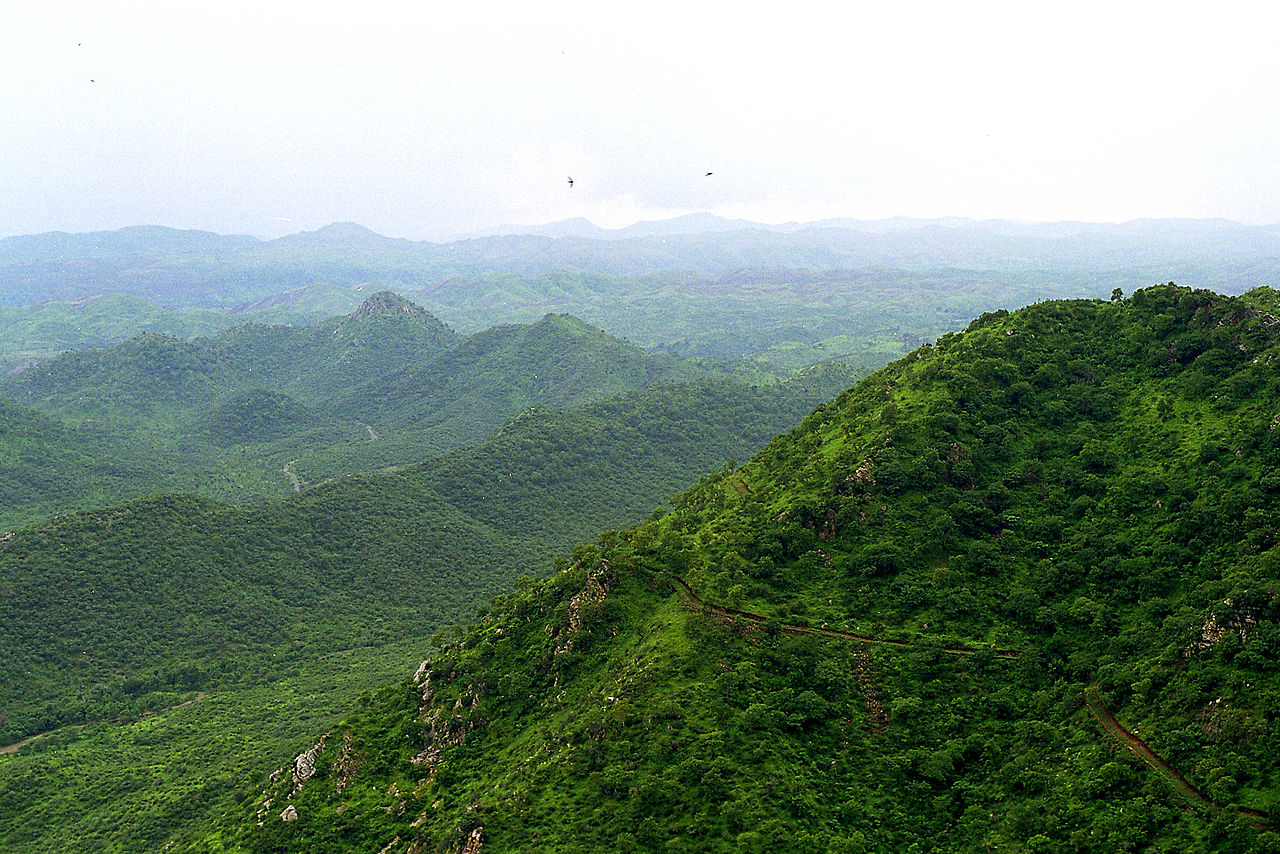
Save the Aravallis: A Citizen’s Appeal to Protect India’s Ancient Ecological Shield
To The Hon’ble Prime Minister of India South Block, Raisina Hill New Delhi Date: 29 December 2025 Subject: Immediate national intervention to protect the Aravalli Hills, North India’s last ecological shield Respected Pradhan Mantri ji, We write to you on behalf of Civic Opposition of India, a citizen-led public interest platform. This is an urgent appeal to treat the Aravalli Hills as a matter of national security for water, air, and climate, not as a routine dispute of definitions and permits. In the last few weeks, the country has watched the Aravalli question enter a dangerous phase. The Supreme Court’s order of 20 November 2025 accepted a uniform working definition for “Aravalli Hills and Ranges” for the purpose of regulating mining and directed a strict framework, including suspension of mining in forest areas and a moratorium on new leases until a landscape-wide sustainable mining plan is prepared. Yet, this definition became controversial because a height threshold of 100 metres was seen by many experts as a blunt instrument that could push large ecologically linked tracts outside practical protection. At a public seminar, it was stated that such a criterion could leave nearly half of the mapped range outside effective safeguards, with only a small fraction of peaks qualifying under the rule. On 29 December 2025, the Supreme Court itself put its earlier direction related to the 100-metre criterion in abeyance, acknowledging that clarification was necessary. This acknowledgment reflects what citizens have been saying all along: the Aravallis cannot be protected through a narrow technical filter while the real threats operate across the landscape. Why this is an emergency
- Water security is collapsing across the Aravalli belt Independent citizen reports and groundwater assessments show alarming levels of over-extraction in districts such as Gurugram and Faridabad, with withdrawal far exceeding annual recharge. Delhi and adjoining NCR areas continue to witness steady declines in groundwater levels year after year. These are not abstract statistics. They mark the difference between a living aquifer and a dead one. The Aravalli system remains among the last meaningful recharge zones for large parts of NCR, Haryana, and Rajasthan.
- Air quality and dust control depend on these hills and forests The Aravallis act as a natural barrier against dust storms, heat waves, and advancing desertification. Their degradation directly worsens air quality in Delhi NCR and intensifies extreme summer conditions. No technological intervention can substitute this ecological function once it is lost.
- Enforcement gaps are visible on the ground Across the region, citizens continue to report illegal mining, stone crushers operating beyond permitted limits, and dumping of waste in forest and revenue lands. Regulatory action often follows after irreversible damage has already occurred. Where enforcement is weak or delayed, destruction proceeds silently.
- A landscape-level Aravalli protection map and public dashboard covering Delhi, Haryana, Rajasthan, and Gujarat, with cadastral overlays showing forests, water bodies, wildlife corridors, and mining leases, updated regularly. Protection must be based on ecological continuity, not just elevation.
- Strict no-mining zones in high-recharge and high-biodiversity areas, with independent verification of compliance and transparent enforcement.
- A single empowered Aravalli enforcement task force with joint command authority to act against illegal mining, crushers, and dumping, supported by time-bound prosecutions.
- Non-negotiable groundwater regulation in Aravalli districts, including compulsory metering, extraction caps, and penalties for violations, especially in severely over-exploited blocks.
- Ecological restoration with measurable outcomes, focusing on native vegetation, soil moisture, recharge capacity, and prevention of further encroachment, rather than symbolic plantation drives.
1872